Frag Sugar Rush: Why Your Public DM Session Is Teaching Nexagon Bad Manners
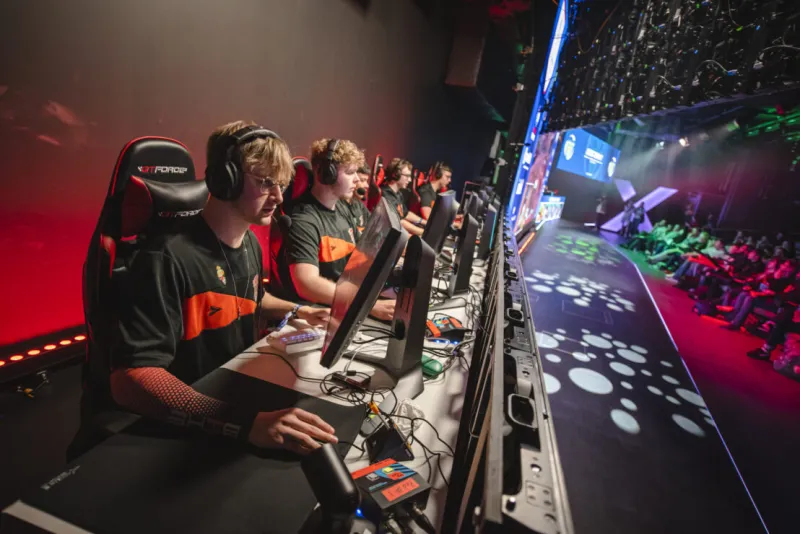
Photo: esports player practicing deathmatch on PC with headset in dark gaming room, over-the-shoulder view, via britishesports.org
Public deathmatch has a way of feeling productive. You queue up after work, get 20 minutes of constant fights, and leave with sore wrists and a scoreboard that says you did something. But there is a difference between being busy and being prepared. For a lot of US Nexagon players, the nightly public DM block is quietly building habits that fall apart the second a real scrim starts.
The problem is not that public DM is bad. The problem is that it rewards the wrong things. Lobby chaos teaches you to overpeek because death costs nothing, to play silent because nobody is trading information, and to chase frags because the scoreboard is the only story being told. Nexagon does not work that way. A series is not a race to 30 kills. It is a series of small, expensive decisions about space, information, and timing.
The Lobby Is Not Lying, It Is Rewarding the Wrong Stuff
On a crowded public server, the fastest way to feel good is to take every fight you can find. Spawns flip, angles reset, and nobody is holding a setup long enough to punish your bad habits. You can dry peek the same corner six times and still end the map with a decent KD. That is not practice. That is a slot machine with a headset.
In Nexagon, a death is not just a respawn timer. It is a lost angle, a delayed rotate, a teammate left holding a worse position, and a round where the other team now knows more than you do. Public DM rarely makes you feel that cost. So players leave the lobby with confidence in exactly the habits that get punished in a real series.
The trap is subtle because the mechanics are real. Your aim is getting reps. Your movement is getting reps. But your decision-making is getting reps too, and those reps are often bad. If you spend an hour training yourself to sprint at the first sound you hear, do not be surprised when that instinct shows up in a scrim.
What Real Series Pressure Actually Feels Like
Nexagon pressure is not constant action. It is waiting, checking, re-checking, and then committing. It is holding a lane while your teammate takes a duel you cannot see. It is knowing that if you die first, the next 30 seconds get harder for everyone. It is making a boring play because the boring play keeps the map stable.
That does not mean you should practice passive. It means your DM routine should include consequences. You need reps where you cannot simply re-peek because you are bored. You need moments where the correct play is to back off, reset, and let the other team make the mistake. Public lobbies are allergic to that idea, which is why you need house rules.
Build a 20-Minute DM Block With House Rules
You do not need a private server and a coach standing behind you. You need a plan and enough discipline to follow it for 20 minutes. Here is a routine that works for US players queuing on East or Central servers after work.
Pick the Right Server
Start with a community server that runs smaller team sizes, ideally 5v5 or 6v6. Avoid 16-player free-for-alls for this block. Check your ping before you commit. If you are sitting above 45 ms on a US server, find another one. Nexagon fights are short enough that server feel matters, and practicing on a muddy connection teaches you to overcompensate.
Set Three House Rules
First, no scoreboard chasing. Hide it if you can. Your goal is not top frag; it is clean decisions. Second, no silent solo flanks for the first 90 seconds of a life. If you are going to take space, call it or at least check whether a teammate can trade. Third, after every death, name the reason out loud before you respawn. Not the aim diff. The decision. You dry peeked. You chased a sound. You ignored a call. You spawned and ran the same route on autopilot.
Run One Map, Not Random
Random map rotation feels fresh, but it dilutes the reps. Pick one map from the current Nexagon pool and stay on it for the full 20 minutes. Before you queue, do a quick map check: spawn distances, common first-contact angles, and the two rotates you always fumble. You are not trying to learn the whole map in one night. You are trying to stop losing the same fight in the same place.
Split the Block Into Three Parts
Use the first four minutes as a pure warmup. No judgment, just hands and eyes. The next twelve minutes are the focused block. That is where the house rules matter. The final four minutes are review. Pull up two or three deaths and ask one question: what information did I have before I committed? If the answer is none, that is your note for the next block.
The Review Prompt That Kills Frag Brain
After the session, write down three lines. Not a paragraph. Three lines. Which death was a dry peek? Which kill did I chase instead of hold? Did I die with a teammate close enough to trade? Those questions do not require a coach or a demo review app. They require honesty.
If you want to go deeper, clip one round where you played slow and one round where you played fast. Watch them back-to-back. Most players will find that their fast play was not actually faster. It was just less informed. That is the frag sugar rush talking. It feels like aggression. It is usually impatience wearing a jersey.
The Point Is Not Fewer Frags
The point is transfer. A good DM routine should make your scrim habits cleaner, not just your scoreboard shinier. If your public DM block is teaching you to overpeek, mute comms, and chase every sound, then you are not practicing Nexagon. You are practicing a different game and hoping the skills commute.
They do not. So keep the public lobby for what it is good at: warm hands, quick mechanics, and a little chaos. But build a stricter 20-minute block around it. Use house rules, check the server, stay on one map, and review the deaths that actually cost you. Your scrim partners will notice the difference before your scoreboard does.