The Half Hour After the Block: Why Nexagon Debriefs Beat Another Queue
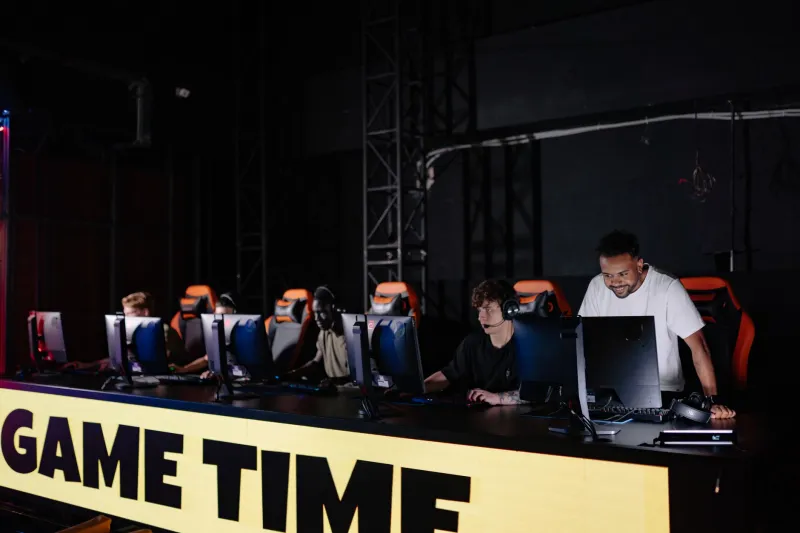
The scrim block ends. Someone says "good games," somebody else mutters about a lag spike, and within four minutes the Discord call has thinned out to the captain and a guy eating chips. That is the moment most US Nexagon teams hand the series away without noticing.
The block itself is the raw material. The debrief is the manufacturing floor. Skip it, and you are shipping the same defective rounds into official matches week after week, wondering why the other team always seems to know something you don't.
The Block Is Not the Lesson
A Nexagon scrim block is loud, fast, and full of half-truths. You remember the clutch, the whiff, the one round where the spawn timing felt off. What you do not remember reliably is the pattern. Was it the same angle lost three times? Did the retake stall on the same chokepoint? Did the in-game leader call the same rotation twice into a stack?
That is not a memory problem. It is a volume problem. Six maps of deathmatch-paced chaos will flatten anyone's recall. The half hour after the block is the only window where the tape, the scoreboard, and the actual feelings of the players are still in the same room. Use it or lose it.
Teams that treat the post-scrim window as optional tend to lose series in a very specific way: they drop the same round type in officials that they dropped in practice, then blame execution. Execution is rarely the issue. The fix was available at 9:40 PM on a Tuesday and nobody wrote it down.
Fifteen Minutes of Facts, Ten of Fixes, Five of Feelings
The most reliable debrief structure I have seen from US Nexagon captains is embarrassingly simple. It fits in thirty minutes and it keeps the conversation from turning into a reenactment of the last fight.
Minutes 0–15: facts only. One person controls the tape. The captain asks three questions and nothing else: which rounds did we lose, what was the first mistake in each, and was it a repeat. No opinions yet. No "I felt like." Just the round number, the timestamp, and the first domino. This is where strong captains separate signal from noise, because a death at 0:42 on a retake is not the same mistake as a death at 0:08 on an entry, and the tape does not care how anyone felt about it.
Minutes 15–25: fixes with owners. Pick two problems, not seven. Assign each one to a person and a deadline. "We are slow on the B retake" is not a fix. "Jules calls the retake trigger at the first smoke, everyone else holds until the second flash, we drill it Thursday" is a fix. Two fixes per block is plenty. More than that and nothing gets drilled because everyone is busy nodding.
Minutes 25–30: feelings, briefly. This is the part captains skip and then regret. Not a therapy circle, just a check: who is tilted, who is confused, who needs a role change next block. A player who is quietly stewing about a call will not execute the fix on Thursday. Five minutes of honesty saves a week of passive-aggressive comms.
Signal vs. Tilt: What a Captain Actually Listens For
The difference between a useful debrief and a shouting match is whether the captain can hear the difference between a complaint and a clue.
A complaint sounds like "we keep losing to that push." A clue sounds like "we keep losing to that push because our anchor is playing the wrong side of the box after the first contact." The first one is tilt with a microphone. The second one is a coaching note.
Strong captains in the US Nexagon scene do three things in that half hour. They keep the tape rolling even when the room gets quiet. They ask "what was the first mistake" instead of "who messed up." And they write the answer down where the team can see it, not in a private notes app that dies with the next Windows update.
One Midwest captain I know runs a rule: if a player says "I don't know" three times in a debrief, that is a signal to stop asking and start showing. Pull the clip, slow it down, let the player see the domino. Nine times out of ten they spot it themselves, and a fix they spot is a fix they own.
The Round You Keep Re-Losing
Every Nexagon team has a signature loss. It is the round type that shows up in scrims, in officials, and in the group chat at 1 AM. For some teams it is the eco retake. For others it is the post-plant hold on the second site. For a lot of US teams right now, it is the first round after a timeout, when comms go quiet and everyone waits for someone else to start the engine.
The debrief is where that signature loss gets named. Not in a vague way, not as "we need to be better," but as a specific round with a specific timestamp and a specific first mistake. Once it has a name, it can be drilled. Once it can be drilled, it stops being a personality trait and becomes a checklist item.
The teams that skip the half hour never name it. They just keep meeting it, series after series, like a guy who keeps taking the same exit and ending up in the same toll plaza.
Make It Sticky: Notes, Clips, One Owner
A debrief that lives only in the call is a debrief that dies by Thursday. The minimum viable follow-up is one shared doc, one clip folder, and one owner per fix. The doc does not need a template with seventeen fields. It needs a date, the two fixes, who owns each, and the round timestamps that prove the problem is real.
The clip folder matters more than people admit. Nexagon rounds are fast enough that a verbal description of a mistake often sounds like a different mistake entirely. A ten-second clip removes the argument. US teams that travel to LANs especially need this, because the guy who missed the call in the scrim is not always the guy who will miss it on stage, and the clip does not care about reputations.
What It Costs to Skip
Skipping the half hour feels efficient. Everyone gets to queue again, or go to bed, or watch the VOD of somebody else's match. But the cost shows up in officials: the same retake lost, the same timeout silence, the same post-plant confusion. You are not saving thirty minutes. You are borrowing them from your next series at a brutal interest rate.
The block is where you get the reps. The half hour after is where you get the wins. Treat it like part of practice, not like an optional postgame show, and the same rounds stop coming back to haunt you.