Two Names, One Player: The Alt-Account Problem US Nexagon Keeps Deferring
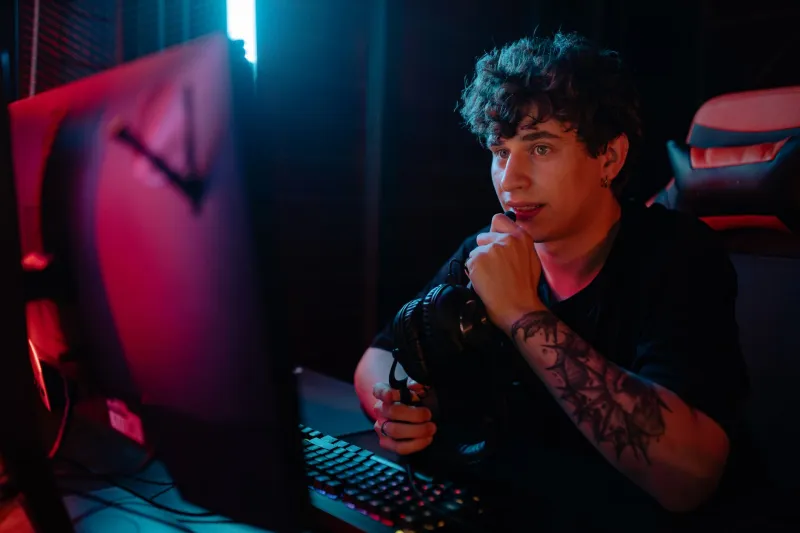
Tuesday night on the US Nexagon ladder, you queue into a name you have never seen. The record says 41-6. The movement says otherwise. They hold a weird off-angle you have only watched in a semifinal VOD, they peek on the same timing as a player you scrimmed last week, and they type “gg” in the exact cadence of someone who has been in your Discord before. You check the profile. Fresh account. No team history. No linked main. Just a win rate that looks like a typo.
This is the alt-account problem in 2026, and it is no longer a niche complaint for people who spend too much time staring at ladder pages. It is a structural issue for anyone trying to build a roster, scout an opponent, or seed an open bracket in the United States. The weird part is not that alts exist. The weird part is how long the community has treated them like weather: annoying, unavoidable, and somehow nobody’s job to forecast.
What Ladder Regulars Are Actually Seeing
Ask players in NA open queue and you get a consistent set of stories. A known high-rank player spends a week on a second account to “practice a new role,” and suddenly a dozen mid-bracket teams have a scouting report built on distorted data. A free agent posts a 70 percent win rate on an account with 38 games, and a captain burns a tryout slot finding out the guy is a known quantity on his fourth name. A queue pops slower because the pool is split between mains, practice accounts, and whatever someone made after a late-night loss.
The result is not chaos. It is something closer to fog. The ladder still works, but the information coming out of it is softer than it used to be. Queue times stretch in off-peak hours because the same 40 players are spread across 60 accounts. Matchmaking gets weird when a “new” account with hidden MMR sits in a lobby full of actual newcomers. And the social cost is real: every strong unknown now gets side-eyed, and every legitimate new player gets asked to prove they are not somebody’s alt.
That last part matters. Open-queue culture in US Nexagon is built on the idea that anybody can show up, grind, and get noticed. If every fresh name is treated as a suspect, the pipeline gets colder for actual newcomers. The alt problem is not just about fairness at the top. It is about how welcoming the bottom of the ladder feels.
The Scouting Report Is Now a Rumor Mill
Coaches and captains talk about scouting like it is homework. In reality, it is pattern matching. You watch a team’s last five matches, note their veto tendencies, find the player who always rotates late, and build a plan around it. Alt accounts poison that process in a specific way: they let a player generate a second identity with a different statistical profile, different hero or loadout preferences, and a different match history. Sometimes that is innocent. Sometimes it is a competitive advantage dressed up as a practice account.
Either way, the scouting report gets tilted. A team preps for a name and gets a player. A captain drafts a veto based on a 12-game sample that belongs to someone who has 400 games on another account. A tournament organizer seeds a bracket using ladder points that do not reflect the actual strength of the player behind the name. None of this requires malice. It just requires a system that treats every account as a separate person.
The quieter damage happens in tryouts and free agency. A player with a shiny alt record gets a look. A player with a grindier main account and a 52 percent win rate gets passed over. Teams are not stupid, but they are busy. When the ladder page is the first filter, the ladder page becomes the story. If that page is half fiction, the story is half fiction.
Why Admins Keep Underreacting
Community admins and tournament organizers know about this. They are not blind. But the incentives push toward delay. Alt accounts are hard to prove without invasive verification. Punishing them too aggressively risks catching legitimate second accounts, practice accounts, or players who use a different name for privacy. And open-queue culture is a point of pride in US Nexagon. Nobody wants to be the admin who turned a scrappy ladder into a paperwork regime.
There is also the awkward fact that some alt activity comes from the same high-profile players who drive viewership and fill brackets. Organizers do not want to ban a name that sells tickets. So the issue gets pushed into the “known problem” bucket, which is where competitive problems go to die.
But underreacting has a cost. Teams stop trusting ladder data. Free agents get penalized for not having a clean main account. Newcomers get harassed by “who is this?” whispers. And the organizers who do nothing end up with brackets that feel less legitimate, even if nobody can point to a single match that was fixed. The problem is not one dramatic scandal. It is a hundred small credibility leaks.
The Fix Is Not a Locked Door
The wrong response is to require government-ID-level verification for every open queue game. That kills the casual pipeline, punishes privacy, and creates a bureaucratic nightmare for volunteer admins. The right response is layered and optional. Make verification available, not mandatory. Give teams and organizers a way to check account history when it matters, and let the open queue stay open for everyone else.
One practical step is tournament registration that asks for a main account link, not a legal name. If a player wants to compete in a paid open bracket, they list their primary account and any active alts used in the last 90 days. That is not a ban on alts. It is a disclosure rule. Organizers can then seed and vet with better information, and players who genuinely use a practice account can say so without hiding.
A second step is a community-run verification badge for ladder profiles. Optional. Free. Something a player can add if they want to be considered for scouting or free-agent lists. Teams can choose to prioritize verified profiles without the ladder itself becoming a gatekept space. The badge does not prove saintliness. It just gives captains a cleaner starting point.
A third step is scrim etiquette. Captains should disclose known alts before a series, especially in paid practice. This sounds obvious, but it is not standard. A simple line in the scrim request — “we may run one alt account for role practice” — would save a lot of post-series arguments.
What Teams Can Push For This Season
If you are a captain or a community organizer, the most useful thing you can do is stop treating alt accounts as a personal ethics problem and start treating them as a data problem. Ask your tournament organizer how they verify account history. Ask your scrim partners to disclose practice accounts. Ask your own players to list their active names in the team Discord. None of that requires a witch hunt. It just requires a little bookkeeping.
The ladder is not broken. But it is foggier than it should be, and fog favors the people who already know the map. US Nexagon’s open-queue culture is worth protecting. So is the idea that a strong record means something. Those two things can coexist, but only if the community stops deferring the boring administrative work that makes them real.